
Pokémon Gold and Silver very nearly never came out: three and a half years of development, a team of four programmers, two delays. Satoru Iwata, then president of HAL Laboratory, helped save the project. But the legend of his "miracle compression" squeezing Kanto into the cartridge goes further than what the sources actually say, so let's set the record straight.

The timing is right to revisit it: Pokémon Gold and Silver reached North America on October 15, 2000, just twenty-six years ago, one year after Japan (November 21, 1999) and six months before Europe (April 6, 2001). Several retrospectives resurfaced this week around the "Iwata miracle", and since the versions in circulation contradict each other, we went back to the original interviews. Here is what is documented, what has been embellished, and what these two cartridges actually invented.
Why did Pokémon Gold and Silver take three and a half years to make?
Because Game Freak was doing three things at once with a tiny team. Announced at Nintendo Space World in November 1997 and first promised for 1998, Gold and Silver only shipped in Japan on November 21, 1999, after three and a half years of work and two delays.
Some context helps. Red and Green, released in Japan in February 1996, became a phenomenon nobody saw coming. A sequel was demanded immediately, and its demo was the most crowded booth of Space World 1997. Except that at the very same time, the studio also had to localize the first generation for the West and deliver Pokémon Stadium on Nintendo 64. Pokémon Yellow plugged the commercial gap of 1998 while the real sequel bogged down.

The scale of the problem fits in one line from Shigeki Morimoto, programmer and historic figure of Game Freak: "there were only about four programmers," he recalls in the Iwata Asks interview about the HeartGold and SoulSilver remakes. Four people for a game twice as ambitious as the previous one. That is the dead end an unexpected outside reinforcement walked into.
What did Satoru Iwata actually do on Pokémon Gold and Silver?
Three contributions are documented in the Iwata Asks interviews published by Nintendo: he analyzed the Red and Green source code to prepare the American version, ported the battle system to Pokémon Stadium in about a week, and built compression tools for the Pokémon graphics. All of it without being part of Game Freak.

At the time, Satoru Iwata was not yet running Nintendo: he presided over HAL Laboratory, the Kirby studio, and acted as a go-between on the Pokémon file at Tsunekazu Ishihara's request. A programmer by training, he dove into the Red and Green source code without any documentation. Morimoto still remembers it: "when I heard that Iwata-san had been able to port it over in about a week and that it was already working...". That battle system port to the Nintendo 64 freed Game Freak from an entire project, letting the studio focus on Johto. Ishihara sums the whole thing up with a quip that stayed in the interview: "it would have been a waste to just have you as President!"
That same 2009 interview is full of anecdotes from an era when every byte counted, like Mew being added into the last 300 free bytes of Red and Green. We told that story in detail in our article on Pokémon urban legends, from Mew under the truck to MissingNo.
Did Iwata's compression really squeeze Kanto into the cartridge?
The legend goes further than the sources. The Iwata Asks interview confirms the compression tools exist, but never says they "made Kanto fit". Technical breakdowns from the retro scene mostly credit a cartridge twice as large, while acknowledging Iwata's work where it really landed: speed.

On the numbers side, dumps of the Western Gold and Silver cartridges weigh 2 MB, on an MBC3 chip that also carries the clock battery. The Japanese cartridges were around 1 MB, already double Red and Green. Recent code analyses estimate that Iwata's compression freed only a few percent of space: most of the gain came from the hardware, not the algorithm, whose real benefit showed in sprite loading times.
Does that mean the credit is undeserved? No, and Game Freak itself says it best. In Ultra Sun and Ultra Moon, released in 2017, a developer in the Heahea City Game Freak office delivers a barely veiled tribute, visible only if you own a Pokémon from the Virtual Console: "when we were having trouble fitting all the data in for Gold and Silver, and we were really in a pinch, this amazing guy came along and made a program for us that solved all our problems." The next line recalls the moment the team was told "halfway through development to make Kanto, too". The legend embellishes the mechanism, not the man's role.
What did Pokémon Gold and Silver invent?
Just about everything that still defines the series: a real-time clock with a day and night cycle, breeding and Eggs, Shiny Pokémon, the Dark and Steel types, held items, and 100 new species bringing the Pokédex to 251. Few sequels ever invented this much in one go.
| What changes | Red and Green (1996) | Gold and Silver (1999) |
|---|---|---|
| Pokédex | 151 Pokémon | 251 Pokémon |
| Regions | Kanto | Johto, then Kanto |
| Badges | 8 | 16 |
| Real-time clock | No | Yes, day, night and weekdays |
| Breeding and Eggs | No | Yes, at the Day Care |
| Shiny Pokémon | No | Yes, about a 1 in 8,192 chance |
| Types | 15 | 17, adding Dark and Steel |
| Held items | No | Yes, Berries included |

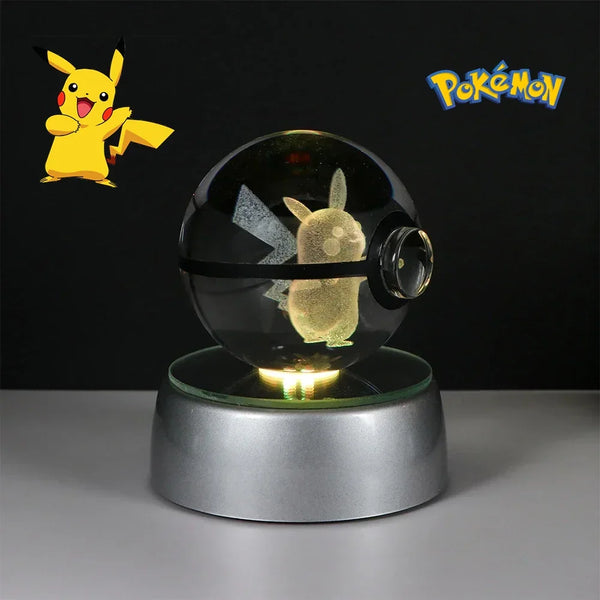
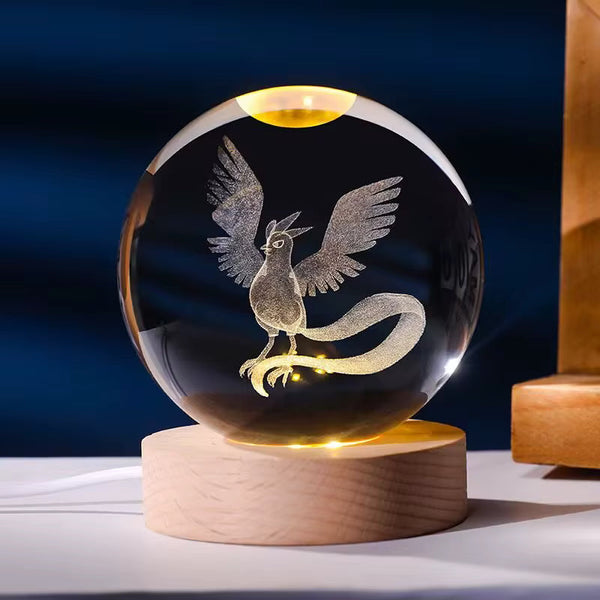
The clock changes the whole mood: some Pokémon only come out at night, the red Gyarados at the Lake of Rage introduced a whole generation to Shiny Pokémon, and some places only live at certain hours. My favorite scene is still the Olivine City lighthouse, where a sick Ampharos serves as the bulb for the whole coastline. A Pokémon doubling as a lamp, of course, speaks to us: the Ampharos LED Poké Ball on a wood stand (29.99 EUR) carries that exact idea onto a bedside table.

The two cover legendaries, Ho-Oh and Lugia, also pioneered the idea of a box legendary at the center of the plot, something the series never dropped again.
How good is the return to Kanto, the famous "second game"?
Once Johto's 8 badges are in hand and the Elite Four beaten, the game reopens all of Kanto: 8 more badges, a region reshaped by three years of history, and at the top of Mt. Silver the hardest fight of its era, against Red and his level 81 Pikachu.
That Kanto is not a copy of 1996. Cinnabar Island was devastated by an eruption, only a Pokémon Center remains, and Blaine fell back to the Seafoam Islands. The cuts drew complaints, but the effect is still striking: no other entry in the series ever delivered two complete regions in a single cartridge. And the silence of the final battle against Red, without a single line of dialogue, remains a masterclass in staging.
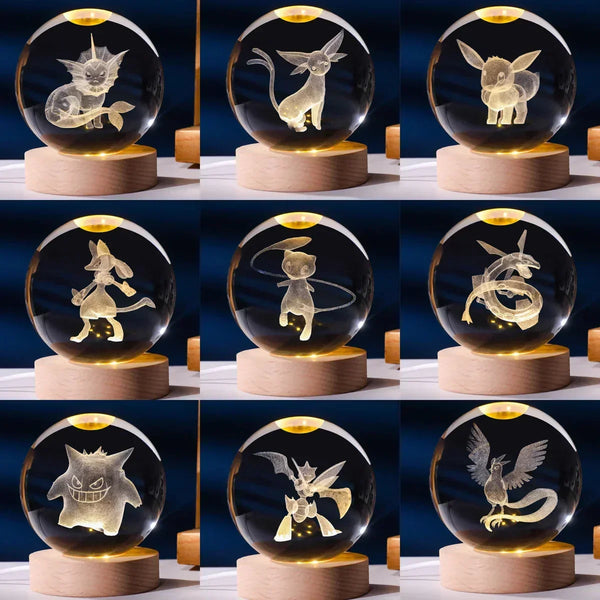
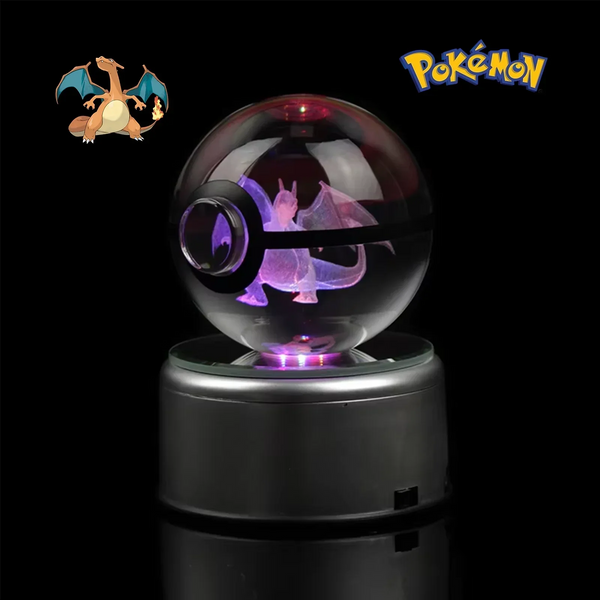
His team is worth a look: Pikachu at level 81, Espeon at 73, Snorlax at 75, Venusaur, Charizard and Blastoise at 77. The HeartGold and SoulSilver remakes would even push Pikachu to level 88. Espeon, precisely, is one of the two Eevee evolutions born in these versions: if that family means more to you than the starters, the Eevee LED Poké Ball on a wood stand plays the Johto nostalgia card. And for everyone who sweated against Red's Charizard, the Charizard LED Poké Ball on a wood stand is revenge on a shelf.
How can you play Pokémon Gold and Silver in 2026?
There is no way left to buy them new: the 2017 3DS Virtual Console release went off sale when the eShop closed on March 27, 2023. What remains are original cartridges on the second-hand market, re-releases bought before 2023, and one deadline not to miss: the transfer to Pokémon HOME shuts down on February 26, 2027.

The Virtual Console re-release of September 22, 2017, previewed in the Nintendo UK launch trailer above, handled wireless trading and battling and remains the best way to play for those who bought it in time. Above all, its catches can still move through Poké Transporter to Pokémon HOME, but not for much longer: the gateway dies with Pokémon Bank. We detailed the steps in our guide on the Pokémon Bank shutdown and the transfer to HOME. After February 26, 2027, a Pokémon left on 3DS stays there forever.

A word on Pokémon Crystal, the third version released a year later: animated sprites, a storyline refocused on Suicune, and above all the series' first playable heroine. It is the version many consider the definitive form of Johto.

One last wink from history: Celebi, the time-traveling Mythical introduced by these versions and long reserved for Japanese distributions, can now be earned without an event. Since the Pokémon HOME 4.1.0 update of October 7, 2026, completing the Kanto Pokédex on FireRed and LeafGreen for Switch grants a Celebi. Twenty-six years on, the forest guardian became the anniversary gift.
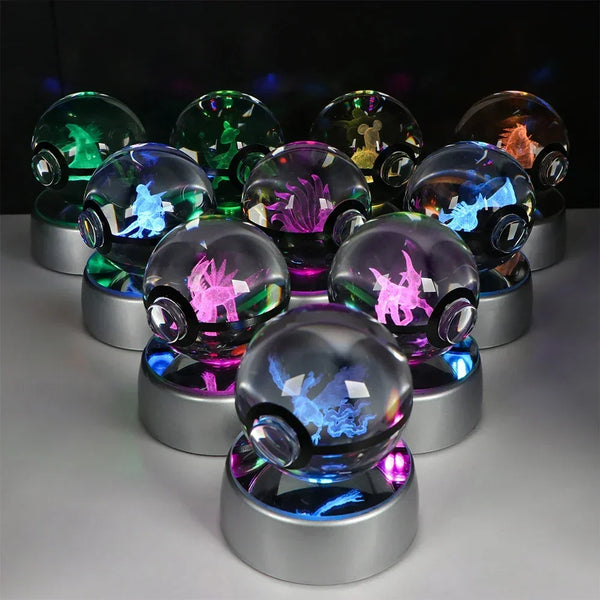
These two cartridges sold over 23 million copies, the all-time Game Boy Color record, including 1.4 million in the first week in the United States alone. If Johto still shines that bright in your memory, our collection of light-up crystal Poké Balls is built to make it shine on a shelf, second-generation Pokémon included.
Image credits: Nintendo and The Pokémon Company (box art, Pokédex artwork, Johto map, Nintendo UK trailer), photo of Satoru Iwata at GDC 2011 by Official GDC (CC BY). Facts checked on October 15, 2026 against the Iwata Asks interviews, Bulbapedia and the specialist press.