
No, Mew was never under the truck in Pokémon Red and Blue: the vehicle is plain scenery, long since confirmed in the game's code. But the rumor got one thing right, Mew really was hidden inside the cartridge. Here are the great Pokémon urban legends, checked one by one, with dates and proof.

Pokémon Red and Blue reached North America on September 30, 1998 and Europe in October 1999. No internet in our pockets, no reliable guides: the game's secrets traveled through playgrounds, and everyone knew a cousin whose friend had caught Mew. With the franchise deep into its 30th anniversary year, these stories are resurfacing everywhere, so let's sort them out for good: what was true, what was invented, and what did Game Freak eventually admit?
Where did the Mew under the truck rumor come from?
From a genuine level design mystery. At the Vermilion City harbor, next to the dock where the S.S. Anne is moored, a truck sits in an area you are never meant to reach: it takes Surf to get there, a move you earn long after the ship has sailed. The few players who made it, usually thanks to a traded Pokémon that already knew Surf, found a silent truck, impossible to push, with nothing underneath. The rumor still promised that using Strength would reveal Mew.

Game Freak ended up playing along with its own legend. In FireRed and LeafGreen in 2004, a Lava Cookie is hidden a few steps from the truck, not under it, but close enough to make the point. In Let's Go Pikachu and Eevee in 2018, a hidden Revive respawns regularly in the same spot. And in late March 2018, when Mew arrived in Pokémon GO through the first Special Research, thousands of players photographed their Mew in augmented reality under real trucks. Twenty years on, the wink is out in the open.
Was Mew really hidden inside the cartridge?
Yes, and it is the truest part of the whole story. In the Iwata Asks interview about HeartGold and SoulSilver, developer Shigeki Morimoto recalls that at the very end of Red and Green's development, removing the debug tools freed roughly 300 bytes on the cartridge. He slipped Mew into that space, quietly, as a joke the whole team was in on. Pokémon number 151 was never meant to be found: its reveal was planned for after release.

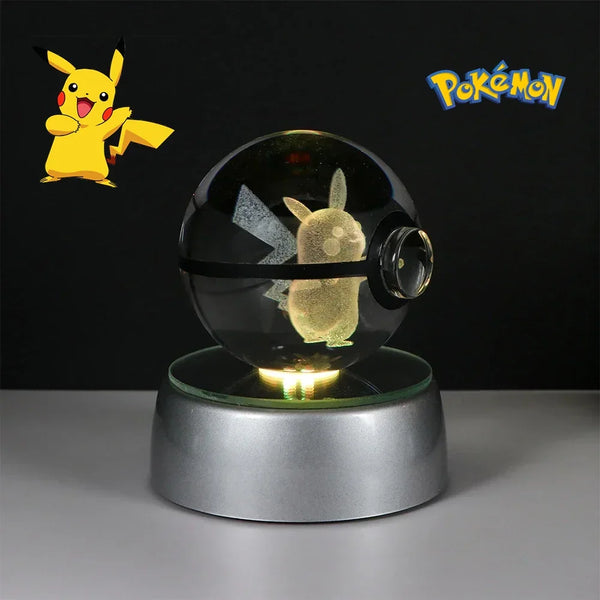
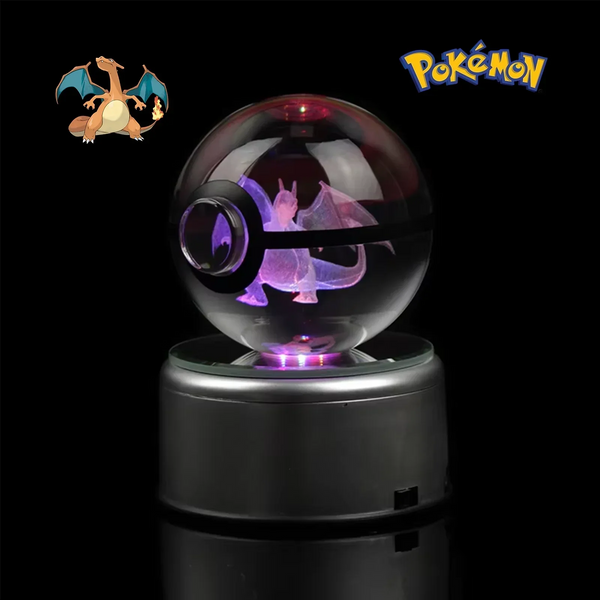
What followed wrote Mew into video game history. In spring 1996, the Japanese magazine CoroCoro ran a prize draw: 20 winners, picked from roughly 78,000 entries, mailed in their cartridge and got it back with a Mew injected by hand at Game Freak. The rumor swelled, sales took off again, and the following year the same CoroCoro rewarded its illustration contests with a certain Pikachu Illustrator card, which has since become the most expensive Pokémon card in history. As for the link between Mew and Mewtwo, it was spelled out as early as 1996 in the journals of the Pokémon Mansion on Cinnabar Island. Mew has kept that special aura among trainers: in our shop, the last two parcels we shipped each contained a Mew Pokéball, one on a wooden base bound for Norway, the other in 3D engraved crystal for the Paris suburbs. Thirty years later, the little pink cat still works its magic.
Does the Mew glitch really let you catch Mew?
Yes, this one is authentic, though it was only documented years after the playground era, in the early 2000s. The idea: get spotted by the Gambler standing in front of the Route 8 underground passage, open the menu at just the right moment and escape with Fly before the battle starts. The game remains convinced a fight is pending. You then battle the Youngster on Route 25, the one with a level 17 Slowpoke, and head back to Route 8: the menu pops open on its own, you close it, and a wild level 7 Mew appears.
The mechanics are fully understood today: the game builds the encounter from the Special stat of the last opponent you fought, read as a species number in the internal index. The level 17 Slowpoke has a Special of 21, and 21 is Mew's internal number. Aim for other values and the same bug spits out other Pokémon, which is why it is also called the trainer escape glitch. It works on Red, Green, Blue and Yellow. Fun detail: Route 25 is also where Bill's house stands, whose supposed secret garden fueled another legend, a pen of rare Pokémon that would unlock after beating the Elite Four several times. Nothing of the sort exists in the game's data.
Did Pikablu ever exist?
Half of it did. In summer 1998, the short film Pikachu's Vacation, shown in Japan before the first movie, featured a small blue mouse nobody could name. Magazines and playgrounds christened it "Pikablu", a supposed aquatic evolution of Pikachu, and bogus codes to unlock it in Red and Blue circulated for months. The creature was real enough, but it was Marill, a Water-type Pokémon with no family ties to Pikachu, released in Gold and Silver in Japan in November 1999.

Pikablu was only the visible tip of a wider phenomenon, the PokéGods: dozens of fantasized Pokémon, invented evolutions and imaginary GameShark codes, born from the void Mew left behind. Once you know one secret Pokémon genuinely exists in the cartridge, everything becomes believable.
What really happened in Lavender Town?
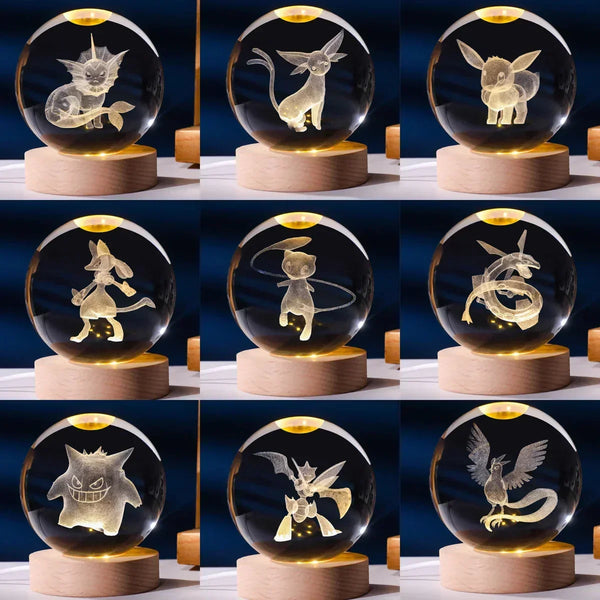
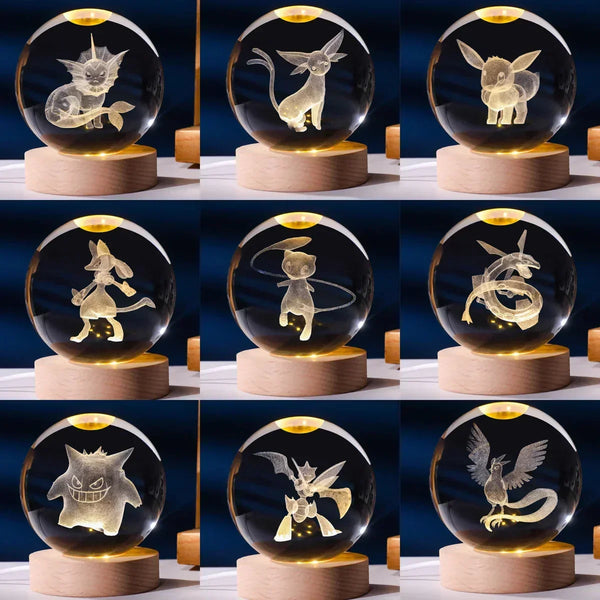
Lavender Town mixes the game's darkest truth with the franchise's worst hoax. The truth first: the Pokémon Tower is haunted, and the ghost blocking the staircase really is Cubone's mother, a Marowak killed by Team Rocket, identifiable only with the Silph Scope. It is written into the game, no myth there. The fan theories, on the other hand, were never confirmed: Gengar as Clefairy's shadow, Cubone as an orphaned baby Kangaskhan. Nothing in the data, though Gengar's silhouette admittedly keeps the doubt alive. It is also the most requested of our Halloween lamps: the Gengar LED Pokéball on a wooden base at €29.99 spends every autumn at the top of our ghost engravings.

Now the hoax. "Lavender Town Syndrome", the tale of music that supposedly sickened hundreds of Japanese children in 1996, is a creepypasta: a fake news report posted on Pastebin on February 21, 2010, embellished over the years with doctored spectrograms. No fact supports it. The story actually recycles a genuine event that has nothing to do with Lavender Town: on December 16, 1997, episode 38 of the anime, "Dennō Senshi Porygon", triggered seizures in front of television sets. The tally from Japan's Fire and Disaster Management Agency lists 685 viewers taken to hospital, 310 boys and 375 girls. The episode has never aired again, anywhere. The creepypasta dressed that real incident up as a musical curse.

Was MissingNo dangerous?
Far less than the stories claimed. MissingNo is a real glitch in Red and Blue: after watching the old man's catching demonstration in Viridian City, you fly to Cinnabar Island and surf along the east coast. The game, which never reloaded an encounter table, reads the player's name instead, and creatures with scrambled sprites appear. The bonus that made it a cult figure: after the encounter, the sixth item in your bag gains 128 copies, the Master Ball and Rare Candy machine of an entire generation.

Nintendo took the matter very seriously: "any contact with it (even if you don't catch it) could easily erase your game file or disrupt your graphics", Nintendo of America wrote in the May 1999 issue of Nintendo Power. In practice, the most common damage was limited to the Hall of Fame gallery, permanently scrambled. Erased saves remained the exception, but the warning fed ten years of schoolyard tales about "the Pokémon that breaks cartridges".
The recap: true or false?
| Legend | Verdict | The reality |
|---|---|---|
| Mew under the truck | False | The truck is scenery, nothing underneath. Winks added from FireRed onward. |
| Mew hidden in the cartridge | True | Added by Morimoto into 300 free bytes, distributed by CoroCoro in 1996. |
| The Mew glitch | True | The Slowpoke's Special of 21 = Mew's internal number. A level 7 Mew, guaranteed. |
| Pikablu | Half true | The blue mouse existed: it was Marill, unrelated to Pikachu. |
| Bill's secret garden | False | No hidden area anywhere in the game's data. |
| Lavender Town Syndrome | False | A 2010 creepypasta recycling the real 1997 Porygon incident. |
| The Pokémon Tower ghost | True | Cubone's mother, revealed by the Silph Scope. It is in the game. |
| MissingNo | True | Real glitch, 128 duplicated items, damage wildly exaggerated. |
How can you relive all this in 2026?
The timing has never been better. FireRed and LeafGreen have been available on Switch since February 27, 2026, the franchise's 30th birthday, and since October 7 the 4.1.0 update of Pokémon HOME connects them to the rest of the series: completing the Kanto Pokédex there even earns you a Celebi. Owners of an old 3DS have a deadline ahead of them, though, Pokémon Bank closes on February 26, 2027, and we covered how to transfer your Pokémon before Bank shuts down. Checking the Vermilion harbor truck for yourself has never been this easy.
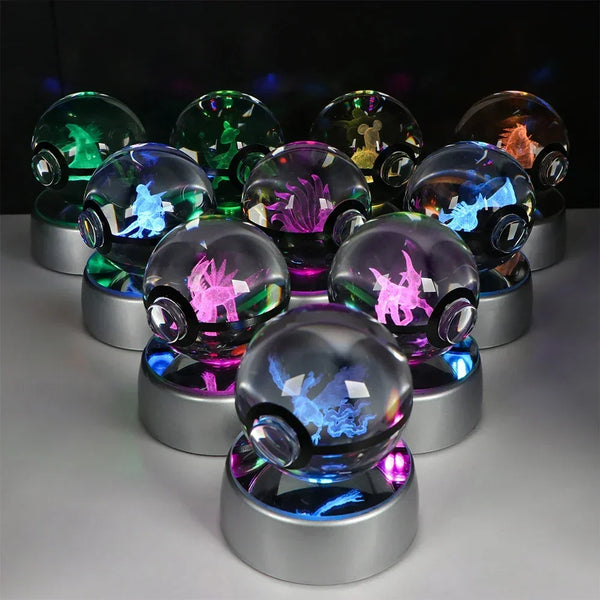
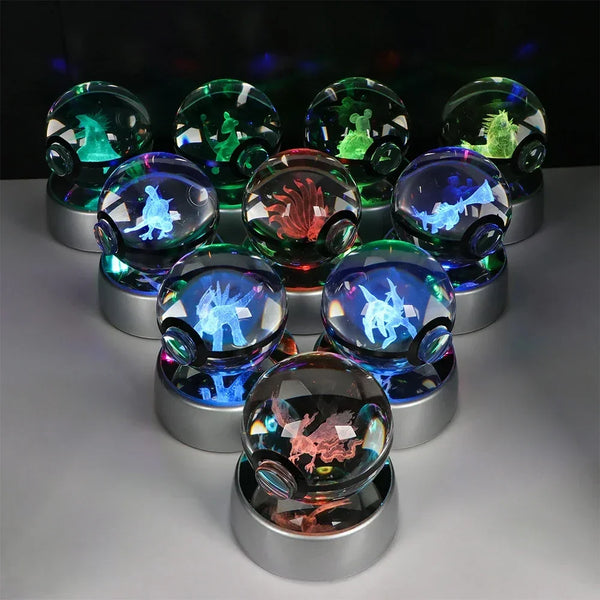
And if these stories bring back Game Boy nights under the blanket, that is exactly who our lamps are made for: the light-up crystal Pokéballs put Mew, Gengar and the others back on the bedside table, ambient glow included. The playground, better lit.
Image credits: Pokémon Red, Blue and FireRed captures and the Pokémon Let's Go model via Bulbagarden Archives, Mew and Marill artwork by Ken Sugimori for The Pokémon Company. Facts checked on October 12, 2026: Iwata Asks interview (HeartGold and SoulSilver), Bulbapedia, Nintendo Power May 1999, and the Japanese Fire and Disaster Management Agency's report on the December 16, 1997 episode.